New South Wales is leading the way in shaping workplace safety law for the algorithmic age.
On 12 February 2026, the NSW Parliament passed the Work Health and Safety Amendment (Digital Work Systems) Bill 2026 (NSW) (Bill), amending the Work Health and Safety Act 2011 (NSW) to incorporate new obligations directed at AI, automation and algorithmic systems used in business operations.
Minister for Industrial Relations and Work Health and Safety, Ms Sophie Cotsis, introduced the law reform stating that:
“In light of growing investment and technology, the bill is critical to ensuring that the health and safety of workers are not put at risk by the use of digital work systems.

This law reform makes NSW the first Australian jurisdiction to explicitly regulate workplace safety risks arising from AI.
WHS risks caused by ‘Digital Work Systems’
In effect, the reforms create a new work health and safety (WHS) duty on business to ensure that the health and safety of workers is not put at risk from the use of a “digital work system”.
While the definition appears to cover workflow automation and productivity tracking, the definition is actually narrower than originally proposed. Notably, references to “software” have been removed after concerns the Bill would inadvertently capture ordinary technologies such as email or standard communications tools. In any case, the scope of what may be considered a ‘digital work system’ remains somewhat uncertain and will depend on the forthcoming SafeWork NSW guidelines.
A new WHS duty
The reforms also introduce an entirely new and specific duty directed at persons conducting a business or undertaking (PCBUs) that use digital work systems to allocate, monitor or influence work. Specifically, a PCBU must, so far as reasonably practicable, ensure that the use of such digital work systems does not put workers’ health and safety at risk.
Adding another layer to the duties of care owed to workers, new section 21A requires PCBUs to look closely at the risks that can arise when work is managed by digital work systems. In particular, organisations must consider whether these systems create or result in:
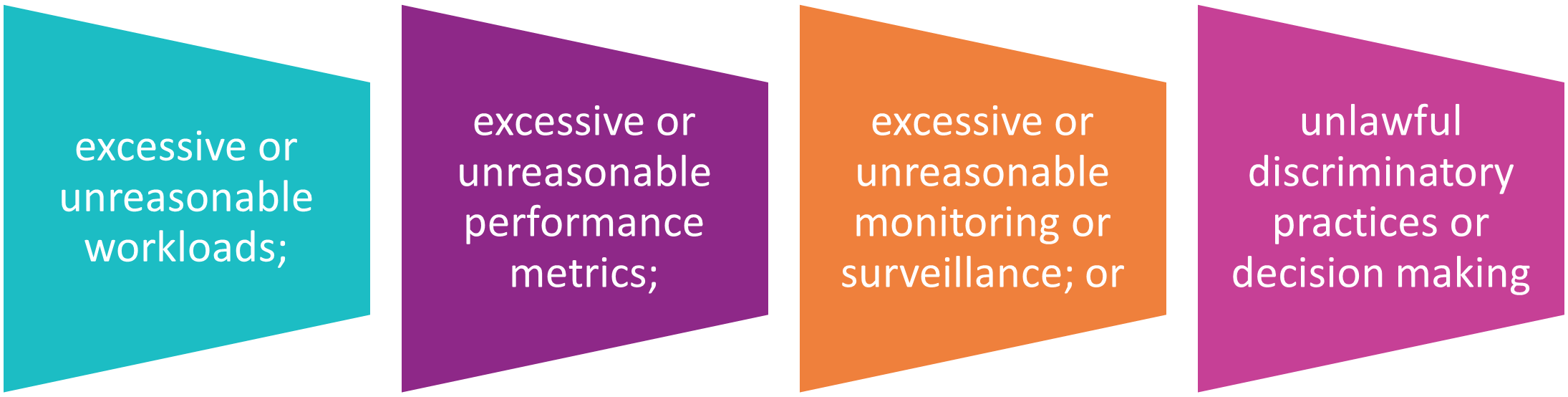
Ms Cotsis specifically called out warehouse and logistics workplaces which use “technology…to drive productivity to a point at which it creates risks and hazards to workers' mental and physical health and safety.”
Guidance provides a grace period
Although the central duty took effect immediately on assent (18 February 2026), other provisions of the new law (like the statutory powers for WHS entry permit holders) have been deferred until at least one month after SafeWork NSW issues its first guidelines. This aims to ensure organisations have access to regulatory guidance before the bulk of obligations come into force.
Privacy twist - expanded union access
Perhaps the most privacy‑sensitive shift is the enhanced right of WHS entry permit holders to require a PCBU to provide reasonable assistance to access and inspect a digital work system relevant to a suspected contravention. This power will be subject to the forthcoming SafeWork NSW guidelines.
However, in practice, this may include access to internal emails, HR and payroll systems, rostering tools, customer databases and operational platforms. Given personal, customer and employee data is often intertwined, organisations will need robust access protocols, logging and segregation measures to avoid inadvertent over‑disclosure.
A mixed reaction
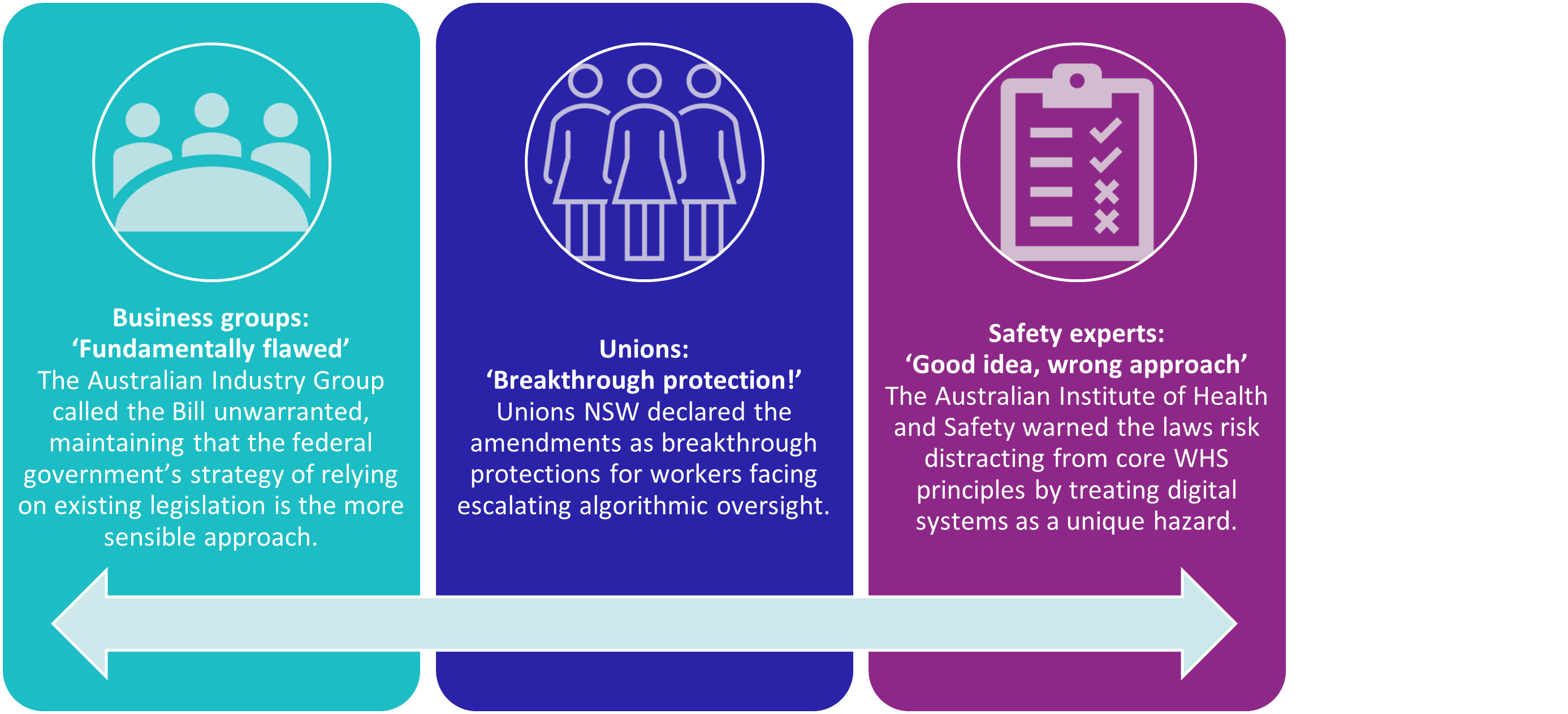
While many acknowledge the need for guardrails for digital work systems, views diverge on whether the amendments strike the right balance between innovation, practicality and worker protection.
While the NSW-based Unions have praised the amendments as breakthrough and necessary protections, several prominent groups have questioned the necessity of the new reforms.
As NSW takes the first step into regulating the digital side of work, it is likely that both challenges and opportunities will emerge. For now, it is one to keep an eye on as the practical impacts start to surface.
This article was written by , Anna Kosterich Restricted Practitioner Corporate Commercial.